Caitlin’s REAL Garden Salad

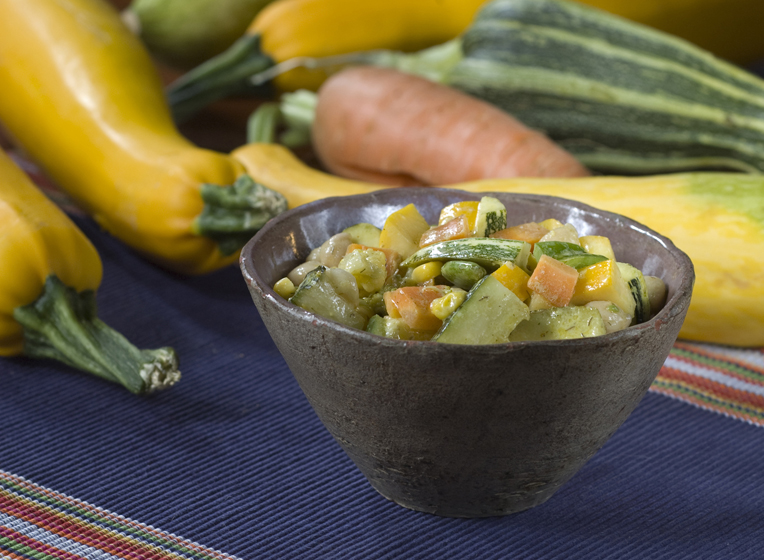
Using loot from my aunt’s garden, my cousin Caitlin created this bright salad. It is hearty enough to be a simple lunch, would make great potluck addition, and would be an elegant side-dish at a dinner party. The fresh herbs and the tangy yogurt dressing make for a vibrant flavor perfect for surviving this record-breaking heat.

Salad

  • 1 summer squash
  • 1 carrot
  • 1/2 c. cauliflower
  • 1/2 c. broccoli
  • 1/2 c. corn, fresh sliced off the cob or frozen
  • 1/2 c. garbanzo beans, canned or soaked in water and boiled till tender
Dressing
  • 1 handful fresh basil
  • 3 tbsp. olive oil
  • juice of 1 lemon
  • 1/2 c. yogurt
  • 1 sprig fresh dill

Chop the squash, cauliflower, broccoli, and carrot into bite-sized chunks. Steam them with the corn till crisp-tender. Add the beans.

Blend all the dressing ingredients, Caitlin suggests using a Vitamix. Toss the veggies in the dressing. If possible, make the salad ahead of time, leaving it time to marinate.

Swanky Summer Soiree

My cousin and I broke out some entertaining show stoppers in honor of some lovely ladies visiting this past weekend. One of these amazing women was passing through on her way back home from Africa after spending a month volunteering with Mothers Without Borders. This organization provides safe shelter, food, and education to orphans, whose abandonment is predominantly due to the death of HIV-infected parents. Ultimate luxury (in this case, fresh peaches!) is most enjoyed in such loving company.

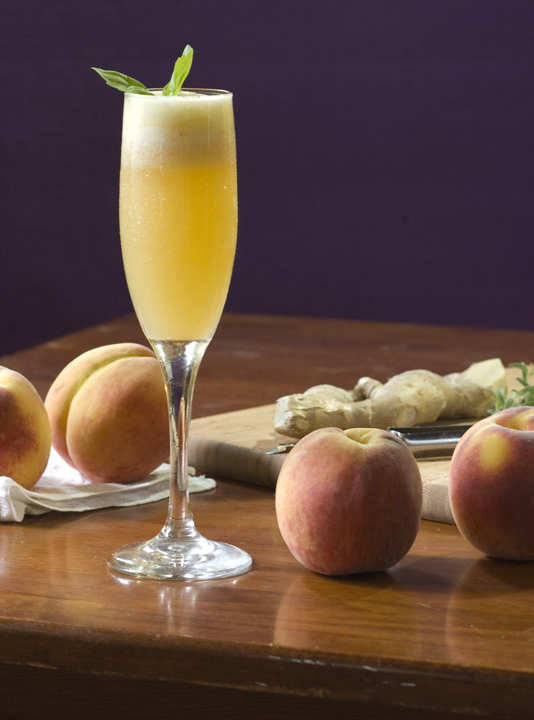
Fruity Cocktails

1 peach
1 lemon
1 pint ginger ale (I suggest a good quality micro-brewed soda)
candied ginger for garnish

In a blender, puree the pitted peach, the juice of the lemon, a bit of finely chopped ginger and enough soda or water to make a syrup. Chill and just before serving, pour into cocktail glasses garnished with a piece of  candied ginger. Alternately, muddle peach slices and lemon juice in a tall glass (with whiskey if you are feeling boozy!). Fill the glass to the top with ice then with ginger ale.
Other fabulous combos I HIGHLY recommend are:
  • cucumber/mint
  • grapefruit/basil
  • and watermelon/cilantro

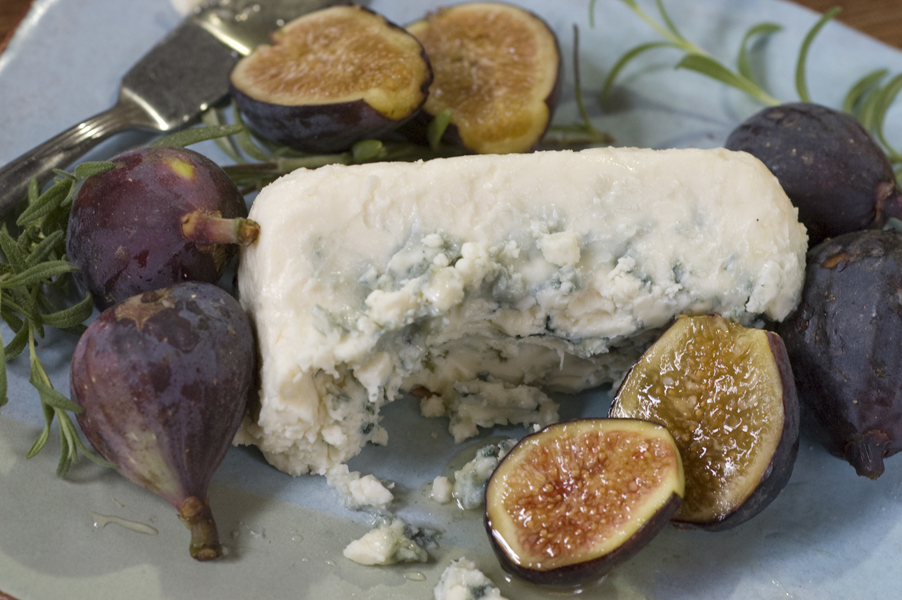
No Fuss Classy Cheese Plate

1 wedge high quality blue cheese
1 dozen ripe fresh figs, halved
honey

Serve the cheese and figs drizzled with honey.

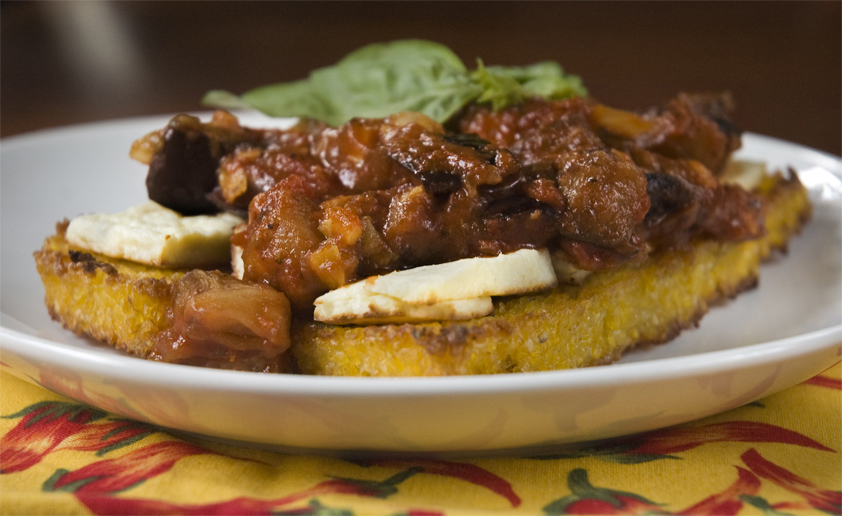
Polenta Squares

Polenta = day old grits

I’ve discovered that my beloved definition, although it appeals to my Southern sensibility, is dead wrong. The Anson Mills site explains that the two foods, nearly indistinguishable to all but  the most experienced palates, are ground from different varieties of corn, dent and flint:

Corn is classified by the type of starch (endosperm) in its kernels. The premier mill corn of the American South, known as dent (the name derives from the dent that forms on the top of each kernel as it dries), has a relatively soft, starchy center. Dent corn makes easy work of milling–it also makes phenomenal grits.

Flint corn, by contrast, has a hard, starchy endosperm and produces grittier, more granular meal that offers an outstanding mouthfeel when cooked. One type of American flint–indigenous to the Northeast–was, and remains, the traditional choice for Johnny cakes. In Italy, flint has been the preeminent polenta corn since the 16th century when Spanish and Portuguese treasure hunters brought Caribbean flint to the Piedmont on ships.

This wasn’t my only discovery in this recipe experiment. My attempts to pan fry chunks of the polenta loaf were in vain; the resulting mush was delicious but formless. I kept the shape and got the crust I was after by cranking up the broiler, but if anyone has any suggestions for a stovetop technique, do share it!

Polenta

2 cups broth*

1 cup water

1 cup corn meal

Sauce

1 tablespoon olive oil

1 – 2 cups chopped veggies (peppers, onion, mushrooms, etc.)**

1/4 teaspoon freshly ground black pepper, plus more for seasoning

1 clove garlic, minced

1/2 – 1 cup chopped fresh tomatoes, canned crushed tomatoes, or jarred tomato sauce

2 tablespoons chopped fresh basil

Bring the broth to a boil in a heavy medium saucepan. Gradually whisk in the cornmeal. Reduce the heat to medium-low. Stir constantly until the polenta thickens, about 5 minutes. Pour the polenta into a greased dish. Cover and let stand at room temperature until set, about 15 minutes. Cut the polenta into squares, top with grated mozzarella, and place under the broiler to toast and melt cheese.

Meanwhile, heat the oil in a heavy large frying pan over medium-high heat. Add the chopped vegetables. Season with 1/2 teaspoon salt and 1/4 teaspoon pepper and saute until the juices evaporate, about 8 minutes. Add the garlic. Add the tomatoes and decrease the heat to medium-low, simmer till heated through and all veggies are tender. Remove from the heat and stir in the basil.  Season to taste with more salt and pepper and/or hot sauce.

Serve the cheesy polenta planks topped with the sauce.

*I used stock made from the bone in a roasted pork shoulder

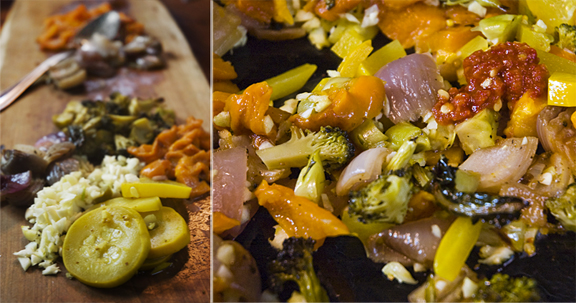
**I used roasted veggies that I keep on hand in the fridge

International Conference on Food Styling & Photography

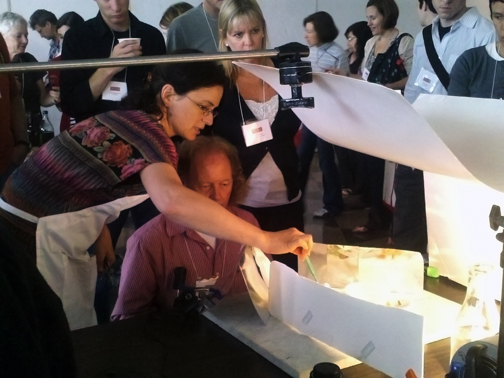
Last weekend I attended the third biannual International Conference on Food Styling & Photography in Boston (June 24–27, 2011).  A wellspring of inspiration, I came away with pages and pages of notes of new things with which to experiment.

The entire event was fabulous (great speakers, great attendance, and of course great food!) but one the highlights was Friday’s “Evolution of Studio Food Photography” session. Three different photographer/stylist teams worked on a mock job in order to illustrate different approaches for solving the business problem. 

As art director, Neil Martin shared the style guide for the shoot. The guide was a compilation of information about the client’s vision, the use of the work, and the budget of the project. One team was instructed to shoot for editorial use, one for packaging, and the last for advertising. He identified the target for this sample case by asking questions including:

  • What are they like?
  • What do they already think of the brand?
  • What should they think?

Another particularly interesting part of his talk was a summary of ways to achieve the look of an “energetic” food photo. Here are some of his suggestions:

  • Stacking & balancing (suggests movement through things looking as if they wanted to fall, or the viewer wants to pick one up)
  • Photos of process & prepping
  • Use of elimination (nothing is as desirable as what’s impossible to obtain)
  • Multiplying (“if 3’s a crowd, 10’s a party!”)
  • Use of interesting angles and cropping

Seeing the different ways the teams approached the problem, set up, and interact was fascinating.

Viktor Budnik and Karen Hazarian Tully

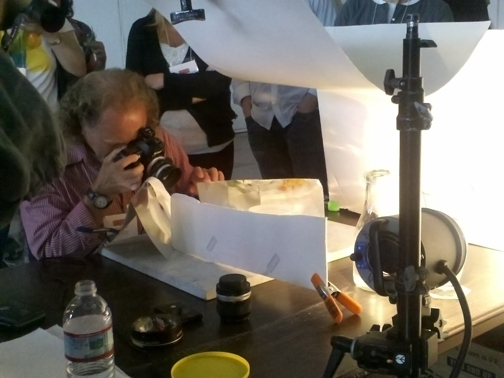
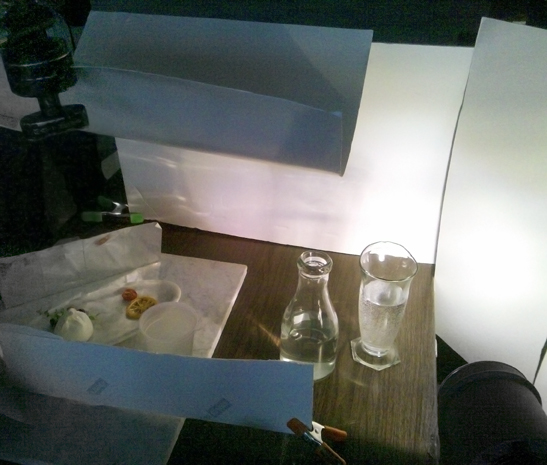
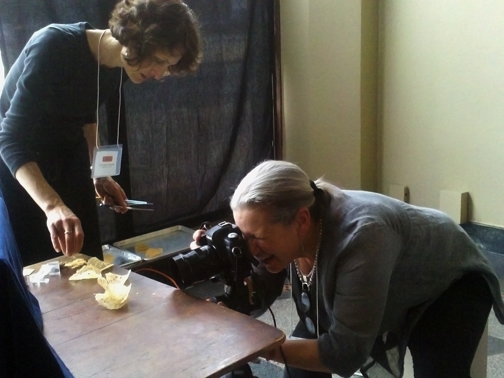
Here photographer Viktor Budnik and stylist Karen Hazarian Tully work on an image of mozzarella lit with a single light reflected off white board and through several glass vases filled with water.

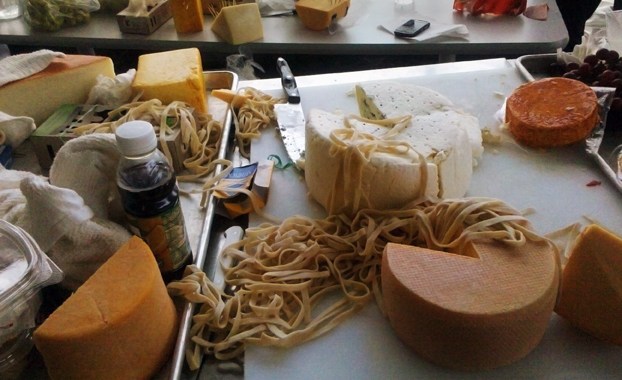
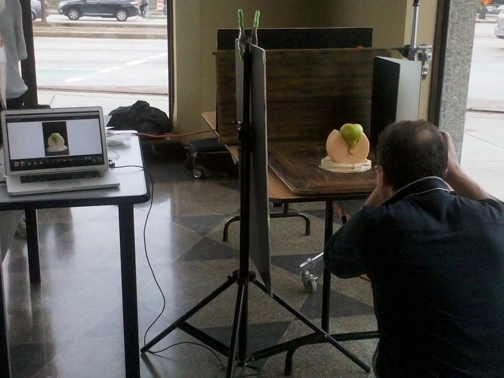
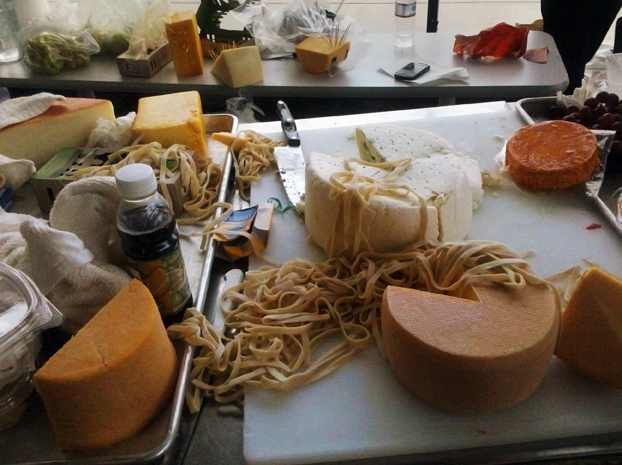
Below, photographer Jeffrey Kauck shoots and image of pasta, cheese and a pear styled by Nir Adar. Jeff is using natural light from the window on the right.

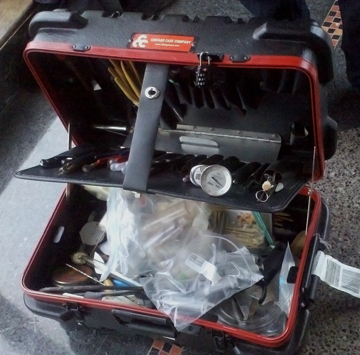
Check out and Nir Adar’s workspace and travel case of styling equipment.

Nir Adar

The third team was composed of photographer Deborah Jones and Lisa Golden Schroeder. Here they are working with stacks of parmesan chips, again lit naturally from the window.

I thoroughly enjoyed the conference and look forward to the next!

Birthday Lasagna

I’m sure being at my beck and call as photo assistant and hand model was my youngest sister’s #1 choice of ways to celebrate her birthday.  Since the lasagna was a whopping success, perhaps she’ll forgive this latest bout of harassment.

Happy birthday Brenna.
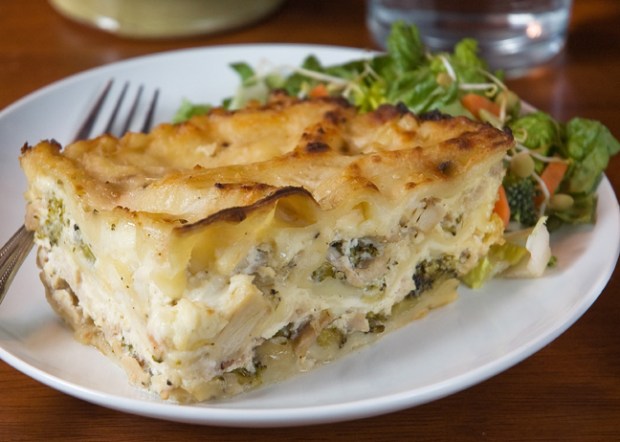
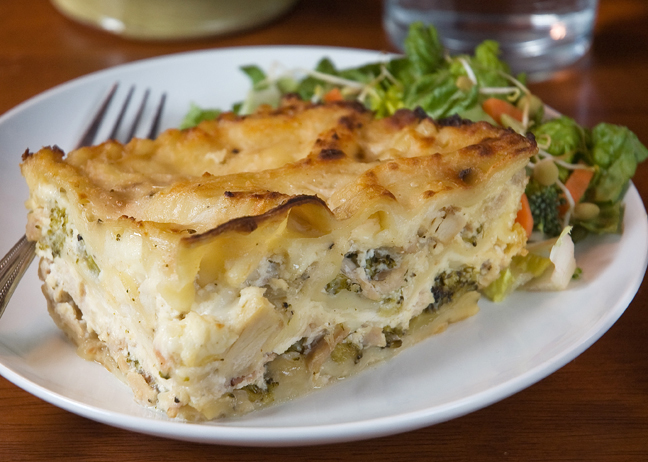
Chicken Broccoli Alfredo Lasagna

4 Tablespoons Butter

4 Tablespoons Flour

2 cups Whole Milk

1 cup Chicken Stock

1-½ cups Freshly Grated Parmesan Cheese

1-½ teaspoon Ground Nutmeg

Pepper

2 Tablespoons Extra Virgin Olive Oil

4 cloves Garlic, Minced

1 Small Onion, Finely Chopped

1 teaspoon Italian Seasoning

2-½ cups Broccoli Florets

2 cups Cooked Shredded Chicken*

4 cups Ricotta Cheese

1-½ cups Mozzarella Cheese, Shredded

1 egg

Box Oven Ready Lasagna Noodles

1. Preheat oven to 375° F.

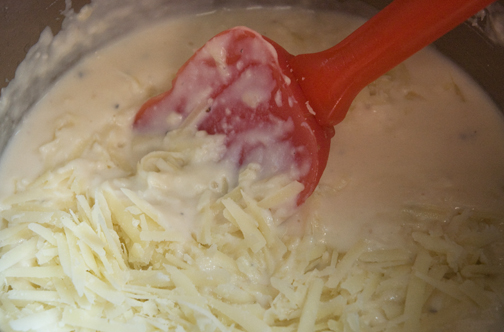
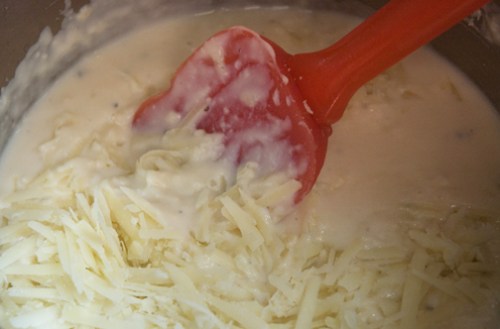
2. Place a large sauce pot over medium heat and melt the butter. Sprinkle the flour over the butter and cook it for about 1 minute. Whisk in the milk and chicken stock and bring the sauce up to a bubble. Add in the nutmeg and season it with black pepper and nutmeg. Simmer until the sauce thickens, 3-4 minutes. Add Parmesan.
3. Heat olive oil in a large non-stick pan. Add onion, garlic, broccoli, and Italian seasoning. Cook on medium-high for about 1 minute until vegetables are tender. Add chicken.*

4. In another bowl, mix the ricotta, mozzarella, egg, and pepper to taste.

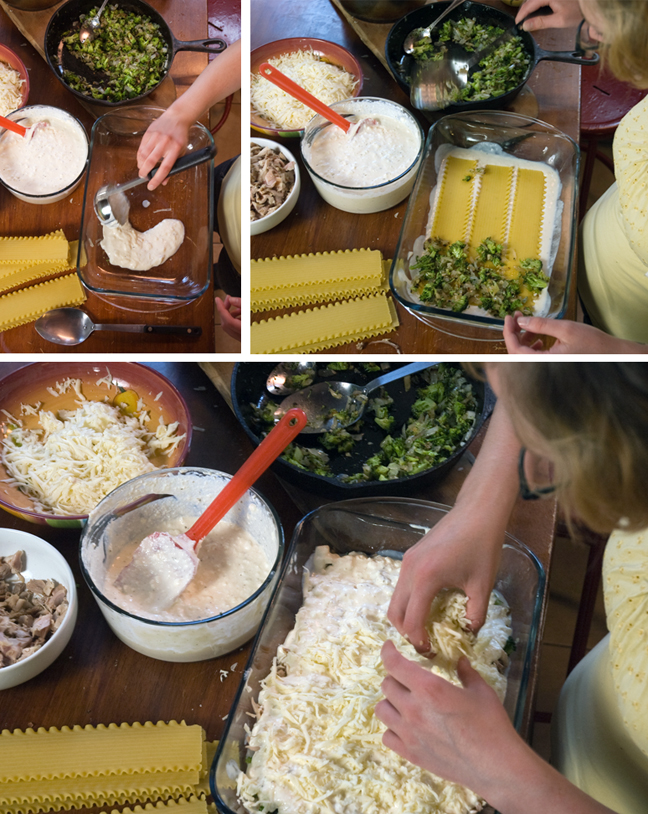
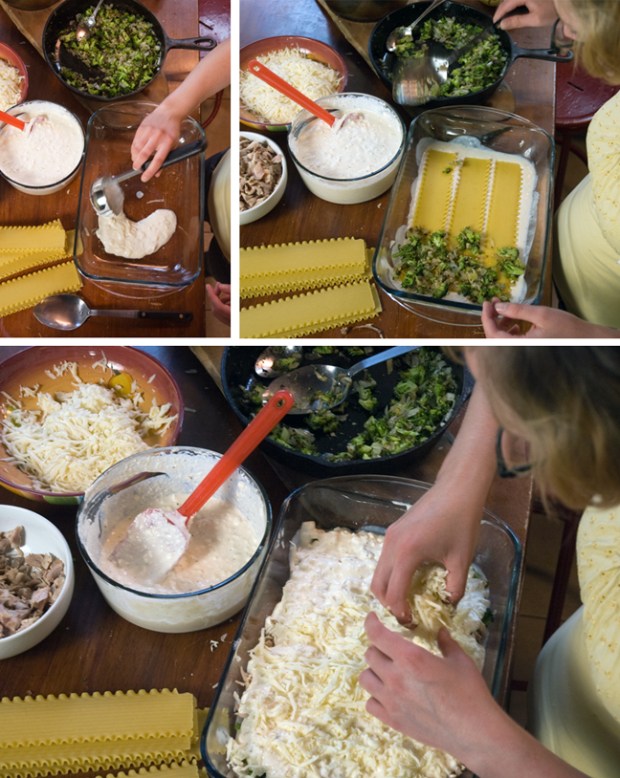
5. Ladle a small amount of the white sauce into a 13×9 casserole dish. Line lasagna noodles on the bottom over the sauce. Add 1/3 of the veggie/meat mixture over the noodles, spread 1/2 of the cheese mixture, and ladle 1 cup of sauce. Repeat until all ingredients are used (total of 3 layers). Cover with foil and bake for 30 minutes, then remove foil and bake for another 20-30 (until lightly browned and cheese is bubbly). Let the lasagna sit for about 10 minutes to cool before serving.
 

*Note: I used a pack of chicken quarters that I baked at 375° F until done (about 45 minutes). I sautéed the onion/broccoli mixture in some of the chicken pan drippings instead of olive oil.
Rhubarb, pear, & cranberry compote parfait

As the only meal where the entrée very well may have a higher sugar content than even the most indulgent desserts, breakfast is easily my favorite meal.  This deceptively healthy treat passes as breakfast, dessert or an afternoon snack and is one of best efforts to thwart my monstrous sweet tooth. An added bonus, rhubarb is in season for a bit longer and can still be seen at very reasonable prices. Though I doubt I’ve ever seen more than the stalk of the plant available at the grocery store, be aware that the leaves are toxic.

Compote:
1 bunch rhubarb, trimmed, washed, cut into 1 inch lengths
4 ripe pears, peeled, cored, halved, each half cut into large chunks
whole berry cranberry sauce, half a can
1 cinnamon stick
1/2 cup water

Parfait:
compote
1 cup greek yogurt
blueberries, fresh or frozen
chopped walnuts

  1. Place the water and cranberry sauce in a large saucepan over low heat. Cook, stirring occasionally, for 3 minutes or until sauce melts.
  2. Add the rhubarb, pears and cinnamon stick. Bring to a simmer and cook, covered, for 5 minutes. Uncover and cook for a further 5 minutes or until fruit is tender and liquid thickens slightly. Remove from heat and set aside for 15 minutes to cool.
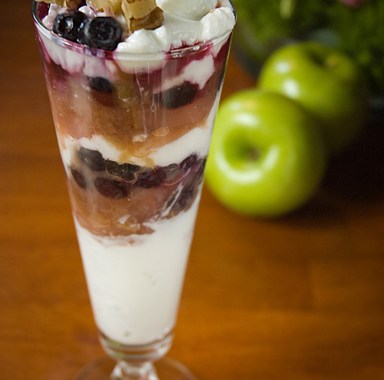
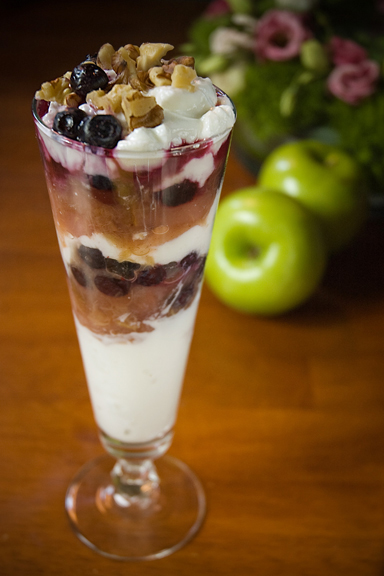
  3. Layer yogurt, compote, blueberries, and walnuts in a serving dish.

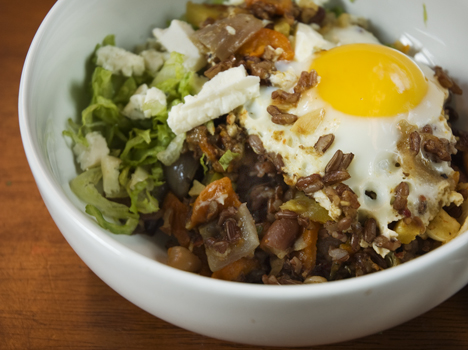
Bhutanese Red Rice Hash

I think of this dish as my version of the garbage plate, albeit one with a slightly lower fat content perhaps! A marvelous hodgepodge pile of my fridge excavations crowned with a golden, runny egg, this dish in some incarnation is my day-to-day sustenance. Bhutanese Red rice, the base grain of this particular version, has a wonderfully nutty flavor and chewy texture– but it is the color that really impresses. Tossed with a vibrant veggies, this colorful meal is akin to stir fry/fried rice but the addition of the egg reminds me more of breakfast hash.

  • olive oil
  • broccoli and purple onion, either fresh or roasted
  • roasted red pepper
  • yellow squash, fresh or pickled
  • garlic clove
  • Huy Fong Sriracha Chili Garlic sauce
  • Bragg Liquid Aminos (or soy sauce or salt)
  • white navy beans, pre-cooked or canned
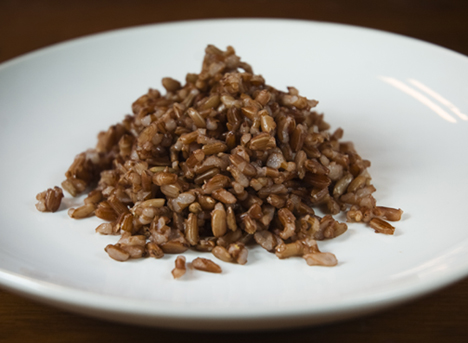
  • Bhutanese red rice, cooked per package directions, about a half cup per serving
  • egg, one per serving
  • shredded lettuce
  • cheese (I used blue)

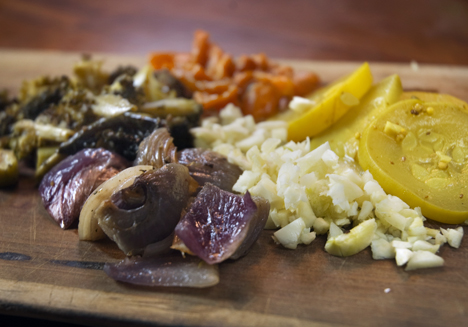
Rough chop the veggies.

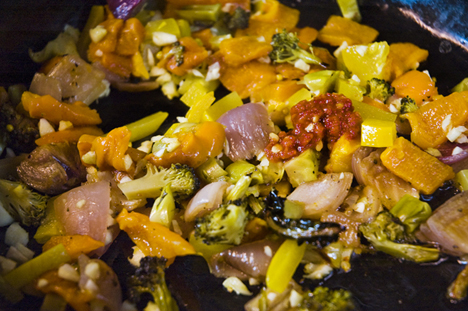
Saute veggies in olive oil till tender. Add beans, hot pepper sauce, and Braggs to taste.


Add rice to pan, toss occasionally till everything is hot.

Serve topped with shredded lettuce, crumbled cheese and an egg fried to your liking.

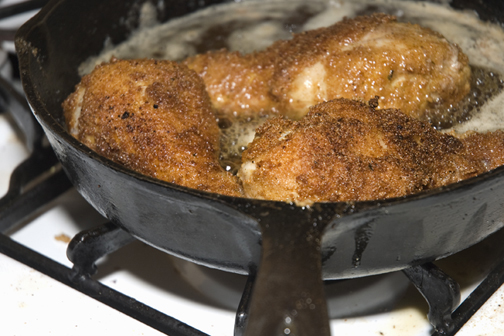
Brenna’s Fried Chicken

Fried Chicken

As my mother’s first-born, I am the only one of my siblings who has any substantial recollection of the cabinets in our childhood home aflame, my mother literally tossing my sister into the grass of the yard, and the neighbor dragging the garden hose from the yard, through the living room and into the kitchen to extinguish the danger before the sirens even arrived. Which is why, for me, fried chicken is a tad anxiety provoking despite its claim as the trademark of wholesome, down home, Southern hospitality.

Fortunately, my sister, perhaps a whopping 30lbs at the time, has no memory of flying through the air out the front door. Nor does she suffer from the same qualms about deep-frying in home kitchens.

Which is fortunate because fried chicken still always feels like a feast. And, I must admit, is steadily transforming into a symbol of sisterly generosity and the heroics of neighbors.

Brenna’s Fried Chicken

  • 1 (3 pound) whole chicken, cut into pieces
  • Italian bread crumbs
  • salt to taste
  • ground black pepper to taste
  • 1 teaspoon paprika
  • vegetable oil for frying
  1. Season chicken pieces with salt, pepper, and paprika. Roll in bread crumbs.
  2. Add about 3/4 inch oil to a large, heavy skillet. Heat to approximately 365. Place chicken pieces in hot oil. Cover, and fry until golden, turning once, 15 to 20 minutes. Drain on paper towels.

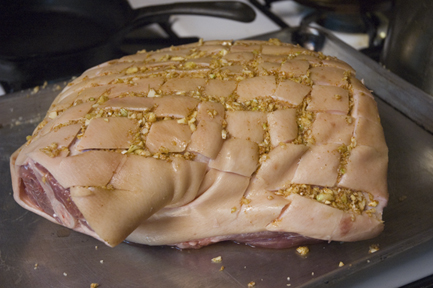
Slow Roasted Pork Shoulder

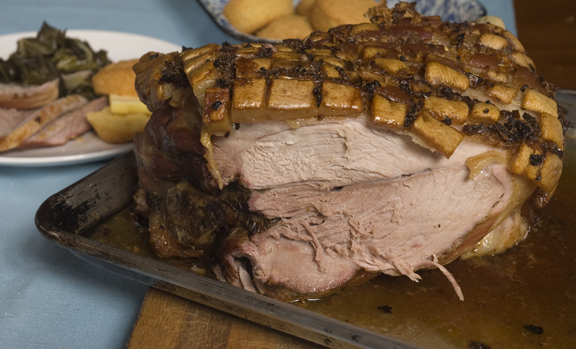
Although I am an unabashed fan of pork, this recipe is just about the biggest bang you can get for your buck: an inexpensive cut, little preparation, utterly delicious. Homesick for Savannah, Georgia, I served this beast with collard greens and corn muffins. Leftovers make terrific pulled pork sandwiches and carnitas taco filling.

1 bone-in, skin-on fresh pork picnic shoulder (mine was 8.5 lb)
1 head garlic
1 tablespoon coarse salt
1 1/2 teaspoons ground Cheyenne pepper (or seasonings of your choice)

1. Rinse pork and pat dry. Score skin in a crisscross diamond pattern, making 1/8-inch-deep cuts about 1 inch apart. Separate and peel garlic cloves. In a mortar and pestle, crush garlic, salt, and pepper into a coarse paste (or mince garlic, then mix with salt and spices). Rub garlic paste all over roast. Set roast, skin side up, on a rack in a roasting pan, preferably on a rack.


2. Roast in a 450° oven until deep golden brown, 40 to 45 minutes.

3. Reduce oven temperature to 225° and bake until a thermometer inserted through the center of thickest part at bone reads 170° to 175°, 8 to 9 hours

Sunday Brunch

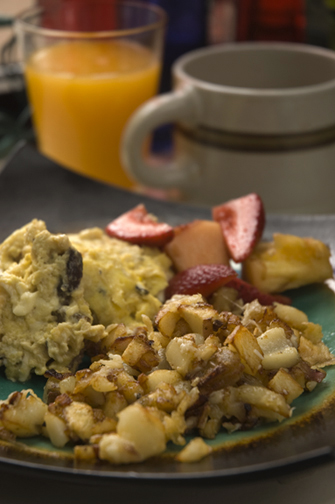
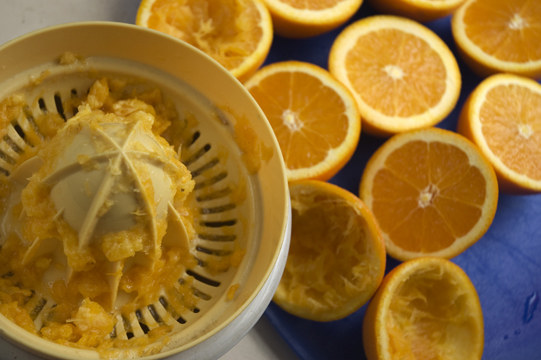
This weekend I had the privilege of being served undoubtedly the best breakfast potatoes I’ve tasted; crispy on the outside, supremely garlic-y with bits of grated Parmesan fried to crunchy perfection– simply delicious. Served with eggs scrambled with hunks of steak and homemade orange juice, they were barely the star of this amazing meal.

Matt, the gracious host and kitchen gadget affectionado, kindly offered these tips for achieving hash brown perfection:

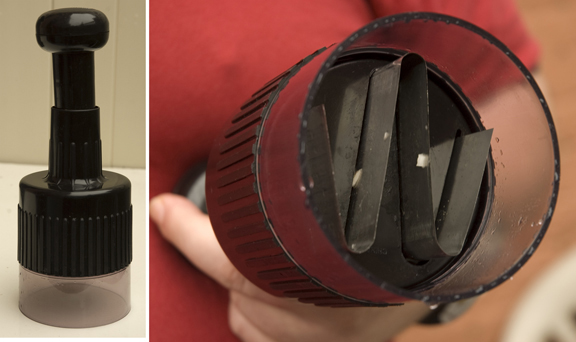
The key to good home fries, and most things that are sautéed, is consistency in size. Potatoes take a while to cook, and the different sized chunks will cook at different speeds. I like to cut mine into small (1-2 cm) cubes to help them cook fast and thoroughly.I used to hand chop, now I rough cut them and use a chopper ( a la Slap Chop ) to streamline the process. I first bought a table top chopper about 6 years ago ( I think it was a Cuisinart ) and honestly didn’t use it much. Lately I’ve been doing a lot of dicing and when I stumbled across a Farberware chopper still in the box at a secondhand store I spent the 4 bucks and took it home. The choppers make short work of dicing most anything to a uniform size in seconds flat.
Putting my chopped potato cubes, diced onion and garlic ( again, all in the chopper ) into a very hot pan with 2 tablespoons of hot olive oil swirled around to coat the pan. I cook on high heat to get a good brown and stir or shake the pan to get a good even crust. Add seasoning to taste ( I like paprika, chili powder, black and white pepper from the grinder and a bit of cayenne to taste.)  After the outside has a bit of color, I turn down the heat to about halfway add a tablespoon of butter and let the potatoes sit and cook through for about 8-10 more minutes, getting a nice crust in the process. about a minute before the potatoes are done, I sprinkle in a healthy dose of fresh grated Parmesan cheese to stick it all together.
These work well for me, but different pans and ovens may give different results (another key to good cooking – good pans) the best advice I can give you is: experiment, and write down what works for you. Bon appetit!